Hammam in Morocco
Visiting a hammam in Morocco is one of the most authentic ways to experience everyday Moroccan life. Far from being just a place to wash, the hammam is a deep-rooted cultural tradition that Moroccans have enjoyed for centuries. For travelers, it offers a unique opportunity to relax, connect with local customs, and understand an important aspect of Moroccan society. To enjoy the experience fully, it’s essential to respect local etiquette and understand how hammams work. This guide explains the origins of Moroccan hammams, how the bathing ritual works, what to expect, typical prices, and the rules of conduct you should follow.
What Is a Hammam in Morocco?
In Morocco, a hammam is a public bathhouse shared by the local community. Historically, hammams played a vital role in daily hygiene, especially at a time when most homes did not have access to hot or running water. They were also closely linked to religious practices, providing a place for deep cleansing before prayer.
Today, hammams remain an important part of Moroccan life, but their purpose has expanded beyond hygiene. They are now associated with relaxation, beauty, and physical well-being, thanks to their steam-filled rooms and heat therapy. While the concept has spread worldwide and inspired modern spas, the traditional Moroccan hammam remains a deeply social and cultural institution.
Hammams have always been important gathering places. Men and women attend separately, and for generations they served as informal meeting spots where people talked, relaxed, and strengthened social bonds. For women in particular, hammams were historically one of the few public spaces where they could gather freely, socialize, and exchange news. They were even places where older women discreetly observed younger women who might one day become part of their family through marriage.
In many Moroccan cities, the quality and beauty of hammams were a source of local pride, reflecting the importance of cleanliness and community life.
The History of Moroccan Hammams
Although hammams are often called Turkish baths, their origins go back much further in history. The concept comes from the Roman baths, which were themselves inspired by Ancient Greek bathing traditions. Roman bathhouses spread across the empire and eventually reached the eastern Mediterranean and Byzantine regions, including present-day Istanbul. This historical link explains why the term “Turkish bath” later became common.
When Islamic civilization expanded, public baths were already well established in these regions. The Arab world adopted and adapted them, integrating hammams into daily, religious, and social life. During the Ottoman era, hammams became even more widespread and refined.
Roman baths were organized around temperature changes, moving from cold to warm to hot spaces. Moroccan hammams preserved this principle, but instead of large immersion pools, they typically consist of steam-filled rooms with varying temperatures, where bathers wash themselves using buckets of hot and cold water.
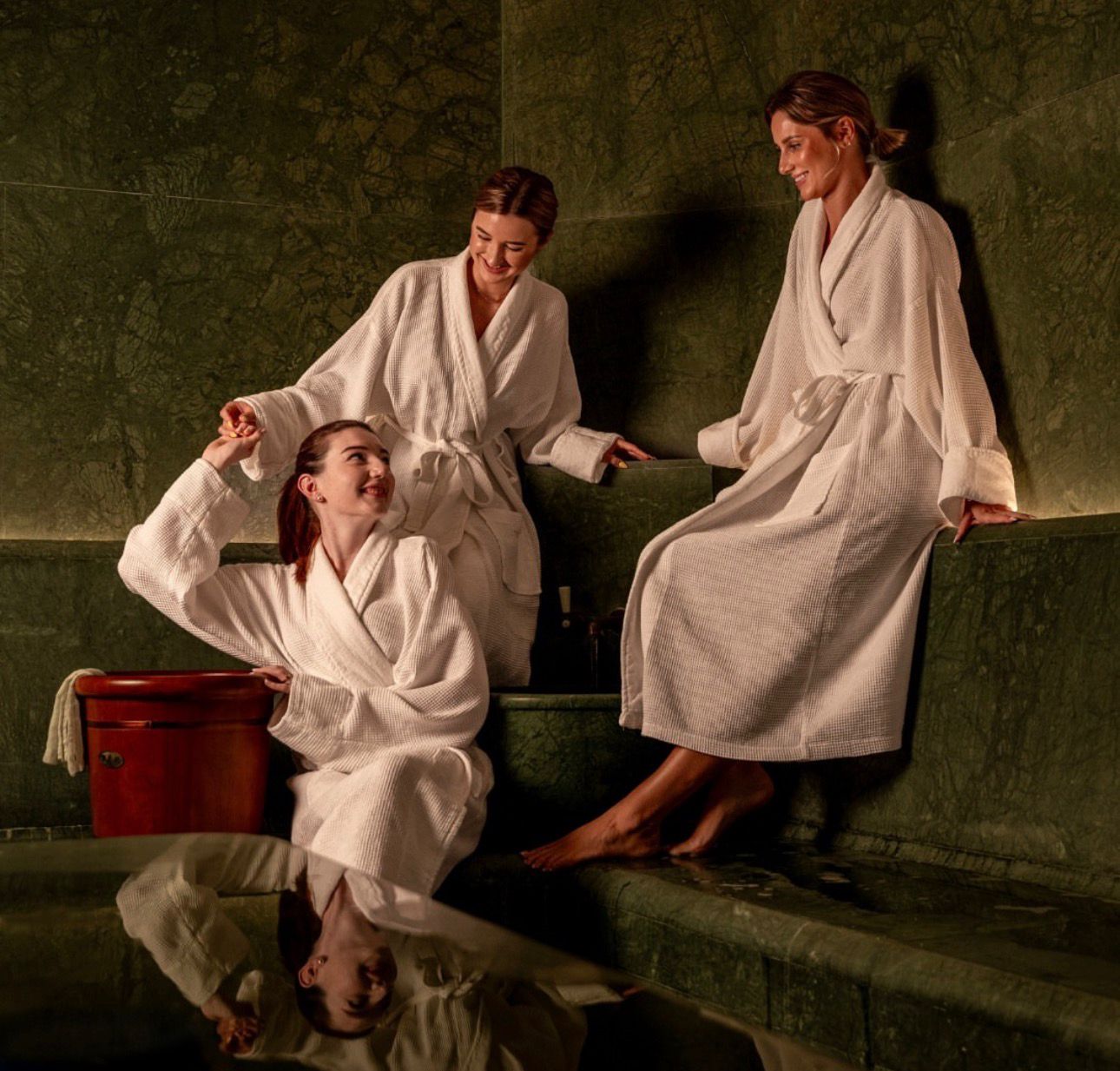
In contrast, many private hammams in Morocco, especially those attached to hotels and riads, may include modern pools and spa-style facilities designed for comfort and relaxation.
The Traditional Moroccan Hammam Ritual
A visit to a traditional public hammam in Morocco usually follows a set routine:
You begin in the changing area, where you undress before entering the bathing rooms. Men usually wear swim shorts. Women often bathe nude, but it’s wise to check what others are doing and keep bikini bottoms on if unsure.
Next, you enter the warm room, where your body slowly adjusts to the heat. Here, you fill two buckets—one with cold water and one with hot. The cold water is often used to rinse the bench, while the hot water is used for a light initial wash.
You then move into the hot room, the most intense part of the hammam. The heat and steam open your pores, encourage sweating, and help release toxins. There is no fixed time for this stage; you stay as long as your comfort allows.
Afterward, you return to the warm room for a deeper cleanse. Using soap and water, you thoroughly wash your body and hair. It’s common for people to help each other by scrubbing hard-to-reach areas like the back, usually with the expectation of mutual help.
Finally, you enter the cool room, where you rinse off completely and rest for a while. This stage allows your body to cool down and return to a normal temperature.
The Exfoliating Massage Experience
Many hammams offer an optional traditional exfoliating massage at the end of the ritual. This treatment is very different from a Western spa massage. It involves vigorous scrubbing using a special glove and black soap (beldi) made from olive oil. The pressure can feel intense, but afterward your skin feels incredibly smooth and refreshed.
This massage is usually performed by hammam staff of the same gender, although sometimes another bather may offer. In that case, it is considered a friendly exchange, often returned as a gesture of goodwill.
Where to Experience a Hammam in Morocco
Finding a hammam in Morocco is easy. Most neighborhoods in large cities have at least one local hammam, and even small towns usually have their own. These traditional hammams are rarely advertised, so asking locals or your travel agency is the best way to find an authentic one.
For travelers seeking more comfort, private hammams are available in many hotels and riads. These offer a more luxurious atmosphere and tailored treatments but come at a higher cost. Access may be limited to hotel guests or available by reservation.
Hammam Prices in Morocco
Prices vary depending on the type of hammam and services. Public hammams are very affordable, often costing less than 20 dirhams for entry. Adding an exfoliating massage usually increases the price to around 60–70 dirhams. Toiletries like soap or towels may cost extra, and it’s customary to leave a small tip for the staff.
Private hammams, designed for wellness and relaxation, are significantly more expensive but offer a more exclusive experience.
Proper Etiquette in a Moroccan Hammam
To ensure a respectful and enjoyable visit, follow these basic rules:
-
Dress modestly and follow what locals do
-
Accept help naturally and return the favor when appropriate
-
Decline services politely if you’re not interested
-
Avoid loud conversations
-
Never use water buckets as seats or foot baths
-
Bring a mat if you’re concerned about cleanliness
-
Always leave a small tip as a sign of appreciation
By respecting these customs, your visit to a Moroccan hammam will be both relaxing and memorable. It’s the perfect way to unwind after a long day of sightseeing and to experience a tradition that has been part of Moroccan life for centuries.